
South Korean Stock Exchange Halts Trading After Sharp Drop
KOSPI plunges over 5%, triggering a temporary halt in program trading via “sidecar” mechanism.


The South Korean stock exchange came under heavy pressure following a sudden drop in futures contracts tied to the KOSPI 200 index. During the session, a special safety mechanism was activated, temporarily limiting trading in response to heightened market volatility.
The trigger for this action was a decline of more than 5% in futures contracts. When such a drop persists for at least one minute, it automatically activates the so-called “sidecar” mechanism.
This mechanism involves a temporary suspension of certain types of transactions, particularly program trading. The pause lasts around five minutes and is designed to curb sharp price movements and reduce the risk of panic among investors.
In practice, this does not mean the market is fully closed. Trading can still continue, but without some automated orders that often accelerate declines.
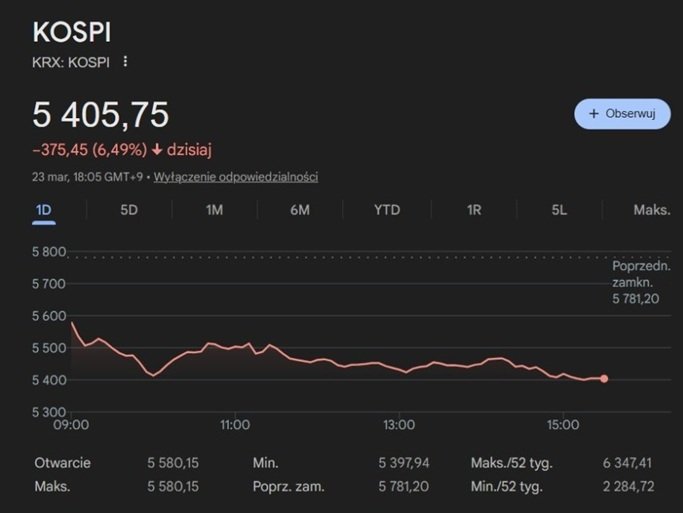
On that day, market pressure was exceptionally strong. The main KOSPI index fell by more than 6%, marking one of the largest single-day moves in recent times.
According to available information, the drop was driven by rising geopolitical tensions, which negatively impacted global investor sentiment. As a result, most companies recorded losses, and the sell-off spread across a broad segment of the market.
Although activating the “sidecar” mechanism did not stop the decline entirely, it helped to briefly stabilize the situation and slow down the pace of the sell-off. This is a standard tool used on the Korean exchange during periods of high volatility.
Similar situations have occurred before, both during sharp declines and rapid increases. This highlights the fact that the South Korean market has recently been characterized by particularly high dynamics.