An increasing number of signals suggest that the U.S. economy may enter a slowdown phase this year. Analysts and investors are taking the possibility of a recession more seriously, and recent data is only reinforcing these concerns.
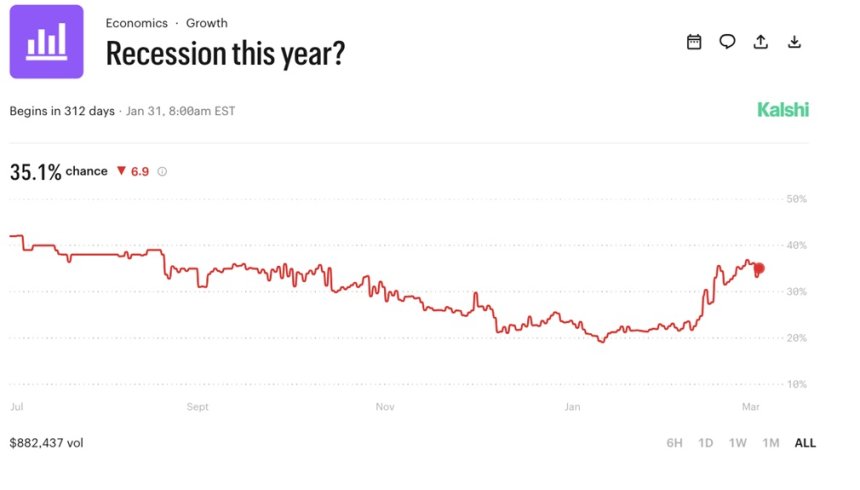
According to Moody’s Analytics, the probability of a recession within the next 12 months has reached 48.6%. Goldman Sachs estimates it at 30%. Prediction markets also point to rising risk, currently at 35%—the highest level since September 2025.
One of the key factors is the situation in the oil market. Tensions between the United States and Iran are driving oil prices higher, putting additional pressure on inflation. Analysts note that when oil prices exceed their long-term trend by 50%, it often coincides with or precedes recessions. Additionally, a $10 increase in the price of a barrel of oil may raise inflation by at least 0.20%.
Concerns are also echoed by major financial institutions. Larry Fink, CEO of BlackRock, warned that tensions involving Iran could even lead to a global recession. In his view, the risk does not disappear even if the armed conflict were to end.
Uncertainty is also visible in financial markets. Stocks are currently considered heavily oversold, reflecting the scale of investor anxiety. In such conditions, any further shock—such as another rise in energy prices—could deepen the economic slowdown.
While some market participants hope that a potential recession could create new investment opportunities in the long term, caution and uncertainty remain dominant for now. All signs suggest that the coming months will be crucial in determining the direction of the U.S. economy.