
DOGE Whale Loses $2.7 Million
A highly leveraged DOGE trade was wiped out during a sharp crypto market crash, resulting in a $2.7M loss.


During a sudden downturn in the cryptocurrency market, a major Dogecoin investor suffered a significant loss. A leveraged position worth 113 million DOGE was fully liquidated after a sharp price drop. The loss totaled approximately $2.7 million and was driven by extreme volatility linked to escalating trade tensions between the United States and the European Union.
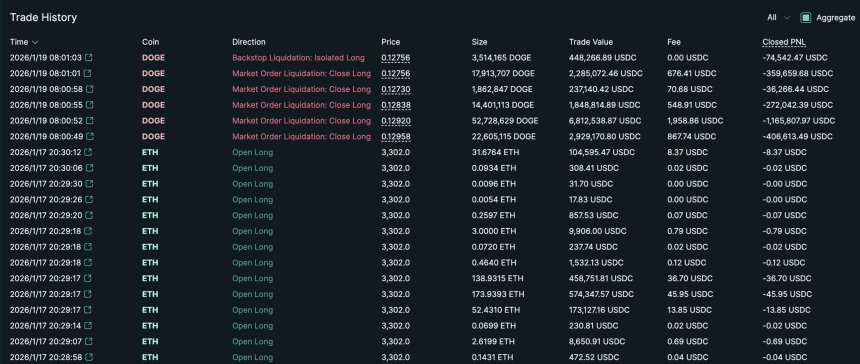
The liquidation occurred on January 19, 2026. According to blockchain analytics firm Lookonchain, a wallet labeled 0x10ea had been holding a long position valued at $14.56 million. The trade had been open for more than 11 days and used leverage of roughly 20x on the Hyperliquid platform. When the market abruptly collapsed, automated risk controls closed the position entirely, leaving no remaining margin.
The sell-off was global in nature. Within a short period, the total cryptocurrency market capitalization dropped by more than $100 billion, while liquidations of long positions in derivatives markets reached around $680 million. The trigger was growing concern over tariff-related conflicts involving Greenland, which weighed heavily on risk assets.
This case highlights how dangerous high financial leverage can be. Even a relatively small percentage decline in DOGE’s price was enough to hit the liquidation threshold, turning previously unrealized gains into a multi-million-dollar loss.
Despite this setback, the investor did not exit the market completely. On-chain data shows that they still hold a leveraged long position in Ethereum at 15x leverage. The position includes about 4,606 ETH, valued at nearly $14.8 million, and is currently showing an unrealized loss of roughly $483,000. The safety buffer stands at around 65%.
This event is another reminder of how strongly sudden macroeconomic factors can impact cryptocurrencies. It also shows that meme coins are particularly vulnerable when traded with high leverage, while on-chain transparency allows observers to track both bold strategies and costly mistakes made by major market players in real time.