
Bitcoin Mining Difficulty Rises by 15 Percent
Bitcoin mining difficulty jumps 15% as hashrate rebounds to 1 ZH/s, strengthening network.


Bitcoin’s mining difficulty has increased by around 15 percent, reaching 144.4 trillion. This marks one of the largest upward adjustments in the network’s history. As a result, significantly more computational power is now required to mine a new block than just two weeks ago.
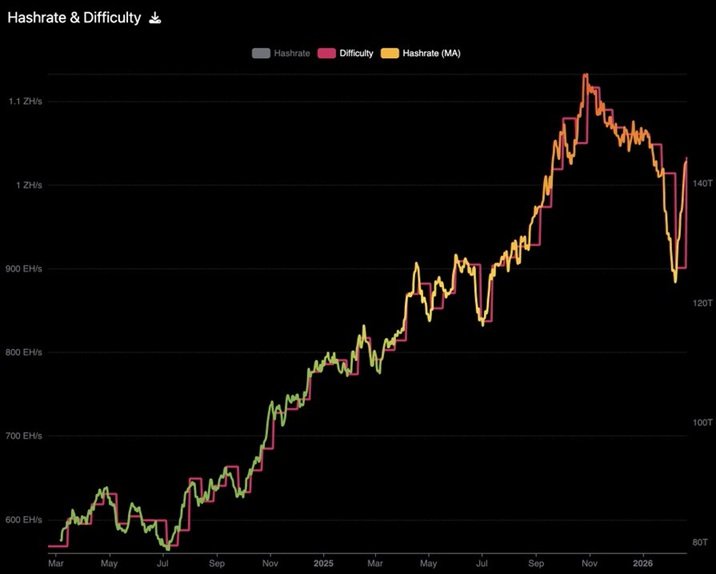
Mining difficulty adjusts automatically roughly every 2,016 blocks, or about once every two weeks. When difficulty rises, miners must use more energy and hardware to earn the same reward in BTC. This latest adjustment has fully offset the previous major decrease, which had temporarily made mining easier.
At the same time, the network’s hashrate — the total computational power securing Bitcoin — climbed from 826 EH/s to 1 ZH/s. This suggests that more machines have come back online, making the network stronger and more secure.
For miners, however, this is a more challenging period. The cost of mining one Bitcoin currently exceeds its market price, which may force some miners to sell newly mined coins. In the short term, this could add selling pressure to the market.