
Beware of Fake Emails Posing as Trezor
Fake emails impersonating Trezor are spreading online, aiming to steal data and infect users’ computers.


Fake emails pretending to come from well-known cryptocurrency companies have become one of the most common types of online scams. Cybercriminals often exploit users’ fear about the safety of their funds, pushing them to make rushed and careless decisions.
Security experts frequently point out that even the most advanced systems have one weak link: the human factor. Phishing attacks rely heavily on emotions, stress, and inattention rather than technical vulnerabilities.
A few weeks ago, there was a widely discussed case involving an employee of an Indian outsourcing company working with Coinbase, who sold user data to hackers. This allowed criminals to target victims via phone calls, text messages, and emails, all while impersonating trusted institutions.
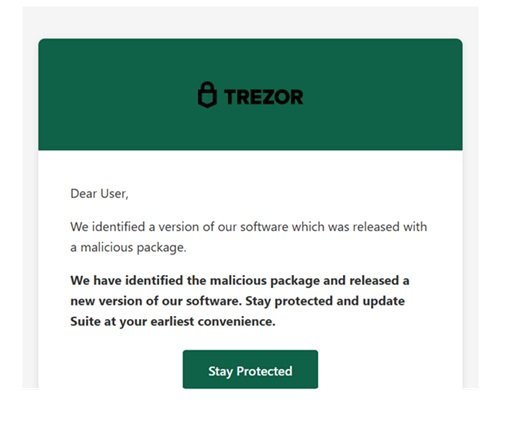
Today, we are highlighting an example of a message that supposedly comes from Trezor. At first glance, it looks legitimate. The logo, color scheme, and wording resemble an official alert about a security threat and an urgent update. However, a closer look reveals that the sender’s email address does not belong to Trezor. Hovering over the link also exposes a suspicious URL that has nothing to do with the manufacturer’s official website.
These types of messages tend to follow a similar pattern. They usually warn about a fake system update, an attempted wallet breach, or the need to accept a new agreement. Their real purpose is to steal login credentials or trick users into downloading malicious software.
The warning is simple: never click on links in emails that create time pressure or threaten the loss of your funds. Always verify the sender’s address and visit company websites only by typing the address manually into your browser. A single moment of inattention can result in the loss of all your savings.