
A 13-Year-Old Bitcoin Wallet Comes Back to Life
A dormant Bitcoin wallet from 2013 moved 909 BTC, now worth about $85 million, highlighting Bitcoin’s massive growth.


After thirteen years of silence, one of the oldest Bitcoin wallets has suddenly become active. An address dating back to the so-called Satoshi era transferred exactly 909.38 BTC to a new wallet. At current prices, that amount is worth roughly $84.6 million. The transaction immediately caught the market’s attention, as it clearly illustrates the extraordinary potential of early cryptocurrency investments.
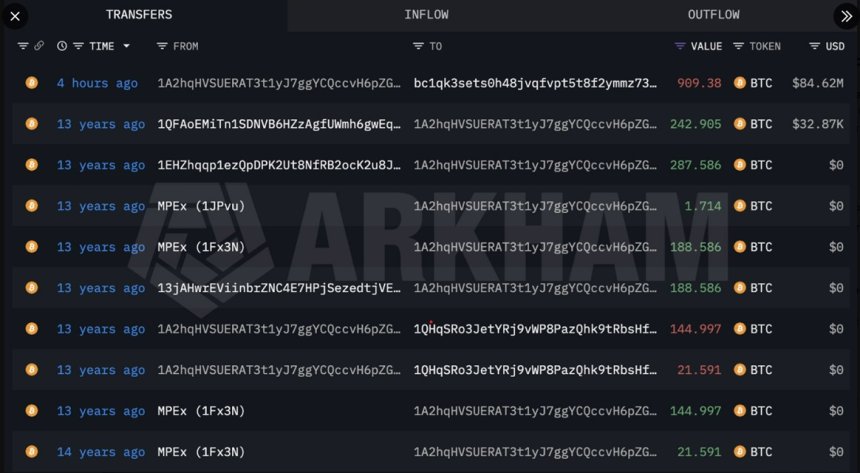
On-chain data from Arkham Intelligence shows that these bitcoins were originally received in 2013, when a single BTC was priced below $7. At the time, the entire holding was worth around $6,400. For comparison, the same amount invested in a low-cost S&P 500 index fund would be worth about $37,000 today. Gold also appreciated over that period, but its gains were far smaller than Bitcoin’s.
This event fits into a broader trend. Throughout 2024 and 2025, many very old addresses—often linked to early network participants—have begun moving their funds. The total value of transferred bitcoins has exceeded $50 billion, with some of the coins actually being spent.
From a human perspective, the story is striking. Holding a position for so many years meant surviving extreme price crashes, bursting bubbles, exchange collapses, and heated disputes around forks such as Bitcoin Cash and Bitcoin SV. It’s also possible that the owner simply regained access to their private keys after a long time.
Importantly, moving funds does not necessarily mean selling them. The transfer could be aimed at improving security, changing the storage method, or preparing for future actions. Analysts will be watching closely to see whether the bitcoins end up at known exchange addresses.
In the background, concerns about quantum computing are also gaining attention. There is growing discussion that future quantum computers could undermine today’s cryptographic signature methods. Older coins, whose public keys have already been revealed, are considered particularly vulnerable. While most experts believe this threat is still many years away, some early holders may already be moving their funds into newer, more secure structures as a precaution.