Ripple on the Future of Payments
Ripple compares today’s crypto payments market to the early days of e-commerce in the 2000s.


Cryptocurrency payments are currently at a stage similar to where online shopping was around the year 2000, according to Reece Merrick of Ripple.
As Merrick points out, more than two decades ago, e-commerce represented only a tiny fraction of global trade. Following the dot-com bubble burst, many consumers still lacked confidence in the internet and were hesitant to trust it with their money. Nevertheless, the foundations of modern online commerce were already being built.
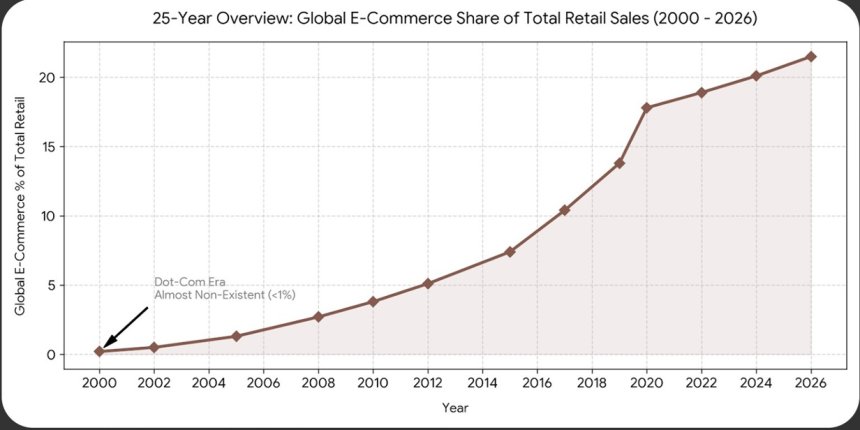
Merrick believes the cryptocurrency payments industry is now experiencing a similar phase. The rapid growth of e-commerce was driven by secure payment systems, improved internet access, and the rise of smartphones. In the crypto sector, comparable roles are being played by scalable blockchain networks, stablecoins, regulated fiat on- and off-ramps, and user-friendly digital wallets.
According to the Ripple executive, the crypto payments sector is currently undergoing a relatively quiet infrastructure-building phase that could pave the way for widespread adoption. He argues that the greatest potential of cryptocurrencies lies in payments rather than speculative trading.
A similar view is shared by Ripple CEO Brad Garlinghouse. In his opinion, stablecoins could become the primary entry point for businesses adopting blockchain technology. Increasingly, corporate finance departments are evaluating stablecoins for payments and treasury management.
This direction aligns closely with Ripple’s current strategy. The company is expanding its offerings in stablecoins, cross-border payments, tokenized settlement solutions, and enterprise-grade infrastructure, while also supporting efforts to establish clearer regulations for digital assets in the United States.
Ripple is also broadening its payments ecosystem. Together with Bitso, the company launched MXNB, a Mexican peso-backed stablecoin operating on the XRP Ledger. According to Ripple, both MXNB and RLUSD could support regulated payment settlements between the United States and Mexico.
The company is also investing in tools for AI agents. Its XRPL AI Starter Kit enables software applications to execute automated payments in XRP and RLUSD through the x402 protocol.
Mastercard is moving in a similar direction. Its global settlement network already supports stablecoins such as USDC, RLUSD, and PYUSD. Previous industry data indicated that the supply of U.S. dollar-backed stablecoins was approaching $300 billion, with USDT and USDC accounting for the largest share of the market.
However, Merrick emphasizes that growth in crypto payments does not automatically translate into increased demand for XRP. Financial institutions can utilize the XRP Ledger without holding significant amounts of the token, as stablecoins and tokenized assets can operate on the network while requiring only small amounts of XRP for transaction fees.
According to Merrick, the future of cryptocurrency payments will depend primarily on user trust. Just as e-commerce needed secure payment systems and reliable logistics to succeed, the crypto industry requires simpler wallets, stable and trustworthy stablecoins, clear regulatory frameworks, merchant-friendly tools, and strong consumer protection mechanisms.
If these elements continue to develop, blockchain technology may gradually become invisible to end users. The payment experience itself will remain simple and intuitive, while the underlying settlement process takes place seamlessly in the background.