
Miners Under Pressure
Bitcoin’s Rising Production Costs — What Does It Mean for the Market?


Bitcoin has been moving with high volatility for weeks, and the real tension is most visible in on-chain data. Miners feel it the most: their situation has become particularly difficult after the nearly 30% price drop from the 126,000-dollar level. At the same time, mining difficulty surged to a record 155 trillion in mid-November, meaning the competition for computing power is now the highest in history.
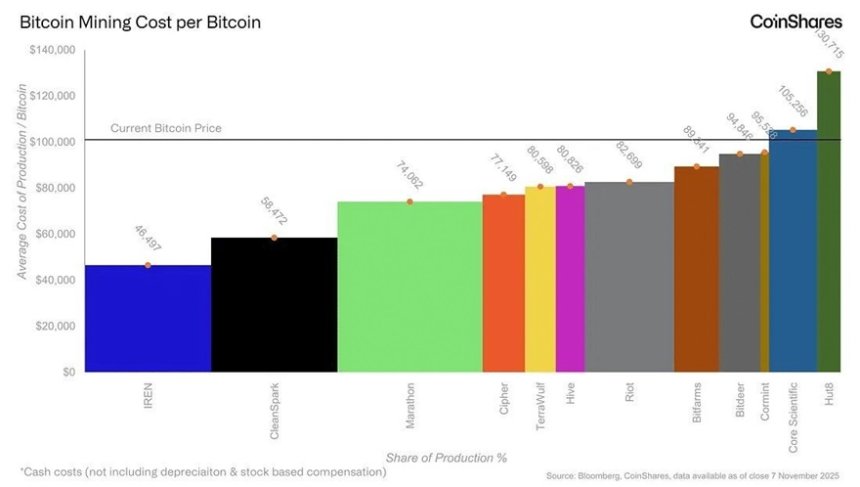
As a result, the average cost of mining one bitcoin has climbed to around 74,600 dollars — only about 20% below the current market price. This leaves miners with a very tight profit margin. With high volatility and weak demand, many would expect a wave of miner capitulation, but the data shows otherwise.
A key metric here is the Miner Position Index (MPI). The MPI fell from 2.17 at the end of November to the current level of –0.9. This indicates that miners have sharply reduced their selling and are behaving more like long-term holders than panicked sellers. A negative MPI typically suggests stronger confidence in a future rebound.
Despite rising costs and increasing difficulty, miners are still holding onto their reserves. This signals that even if the market hasn’t yet reached its bottom, the network’s underlying fundamentals remain stable — and miner behavior may help point to Bitcoin’s next major move.