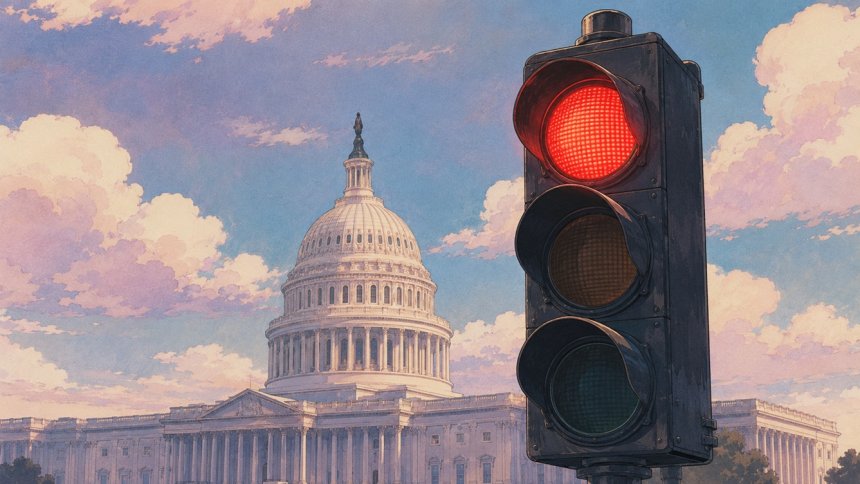
Are Stablecoins Hidden CBDCs?
The U.S. rejects CBDCs, but stablecoin regulations introduce control mechanisms similar to central bank digital currencies.


In the United States, a debate is underway about whether stablecoins are truly different from central bank digital currencies (CBDCs). Although authorities in Washington officially reject the idea of a digital dollar issued by the Federal Reserve, the growing system of privately issued dollar tokens is beginning to include some comparable mechanisms of control.
In January, Donald Trump signed an executive order prohibiting federal institutions from creating or promoting a U.S. CBDC. At the same time, in July 2025, the GENIUS Act was adopted, introducing federal regulations for stablecoin issuers. Under the new rules, companies must implement anti–money laundering procedures, monitor suspicious transactions, and maintain the ability to block or freeze funds based on legal decisions.
This does not mean the United States has introduced a CBDC through the back door. Stablecoins remain private liabilities of their issuers rather than direct claims on the central bank. There is also no single government-run transaction ledger or mandatory digital wallet operated by the Federal Reserve.
Even so, questions remain about whether a system of privately issued digital dollars could, in practice, provide a similar level of control over users’ money. A White House report has already noted that stablecoin issuers may cooperate with law enforcement agencies when freezing or seizing funds.
Examples suggest such mechanisms already exist. Documentation for the USD1 token, linked to the company World Liberty Financial, includes provisions allowing the blocking of addresses, freezing of tokens, and sharing information with law enforcement authorities. Similar powers appear in the documentation for the USDC stablecoin issued by Circle.
The stablecoin market is already enormous. Its total value is estimated at around $313 billion, with USDC alone holding a market capitalization of about $77 billion. The USD1 token has reached roughly $4.6 billion. Each year, more than $62 trillion in stablecoin transfers take place across blockchain networks, although analysis suggests only about $4.2 trillion reflects real economic activity.
Forecasts point to continued rapid growth. According to Citi, stablecoin issuance could reach $1.9 trillion by 2030, and in an optimistic scenario even as much as $4 trillion.
As financial assets such as stocks, ETFs, and government bonds become increasingly tokenized, new questions emerge about the scale of control within the broader digital financial system. As more instruments move onto blockchain infrastructure, tools for blocking or halting transactions could become a standard feature of the system.
The most likely scenario is that the United States will not introduce a traditional CBDC but will instead expand a regulated sector of private stablecoins. In such a system, mechanisms like transaction freezes or temporary suspensions could become a normal part of how digital dollars operate, even if they remain technically private assets.
Ultimately, the debate centers on the limits of control: how broadly authorities can decide to block funds, how long such restrictions can last, and whether users will retain a genuine ability to use independent forms of digital money.