
New XRP Ledger Proposal “Batch” (XLS-56)
New XRP Ledger Proposal “Batch” (XLS-56) Gains Traction Among Developers

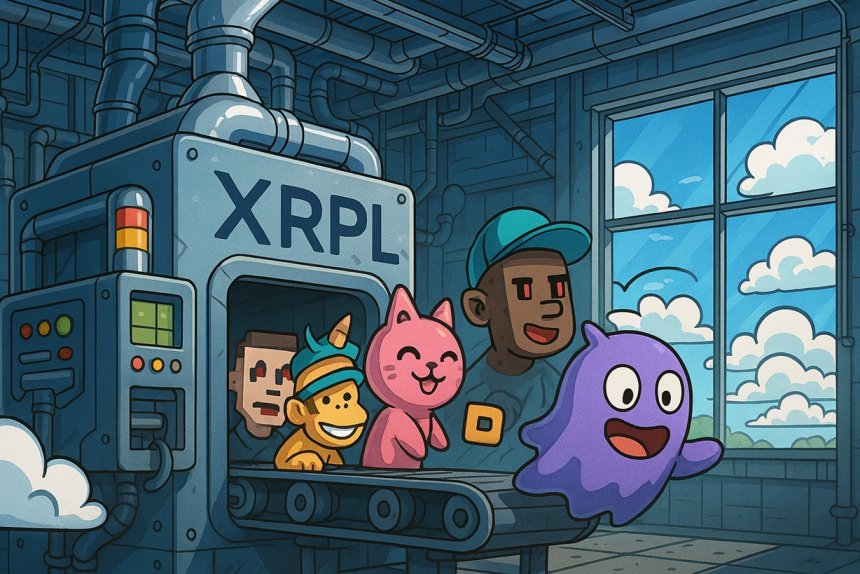
A new amendment proposal for the XRP Ledger, known as Batch (XLS-56), is drawing growing attention from developers and validators. One of them, who goes by the alias Vet, has been testing the new feature on the developer network.
According to Vet, Batch allows multiple actions — such as minting and paying for NFTs — to be bundled together into a single automated transaction.
Vet explains that this could pave the way for a truly decentralized NFT exchange, where users could trade tokens directly with each other. For example, one person could swap five of their NFTs for two from another user — all in one secure, atomic transaction. He compared the idea to item trading in games like RuneScape, suggesting that a similar interface could make NFT swaps more transparent and user-friendly.
At the moment, the Batch amendment has reached 68.57% validator consensus. It needs 80% support to be activated. The XRP Ledger (XRPL) is an open-source, decentralized blockchain that underpins Ripple’s solutions for cross-border payments.
What Does the Batch Amendment Do?
The Batch proposal introduces atomic transactions to the XRPL — the ability to group several operations and execute them all at once as a single unit. The idea is simple: either every transaction in the batch succeeds, or none of them do. This prevents partial errors and keeps data perfectly consistent.
The concept of atomicity comes from computer science, where it refers to treating a group of actions as one indivisible process. Applying this idea to the XRPL could make complex operations, like multi-step NFT exchanges, much easier to handle — laying the foundation for more advanced digital asset markets.
Batch allows up to eight transactions to be combined in one bundle. It also introduces an ALLORNOTHING mode, ensuring that the entire group of transactions executes only if all of them are valid.
Four Operating Modes
In addition to ALLORNOTHING, the Batch proposal supports four execution modes:
-
ALLORNOTHING – executes only if every operation is valid.
-
ONLYONE – executes just one transaction from the batch.
-
UNTILFAILURE – runs each transaction in order until one fails.
-
INDEPENDENT – executes each transaction separately, without affecting others.
Thanks to this flexibility, developers can tailor batch execution to their specific needs — enabling more sophisticated applications and use cases within the XRPL ecosystem.