Crypto Loses Viewers on YouTube
Crypto-related YouTube viewership has fallen to its lowest level since 2021, signaling fading retail interest.

Viewership of cryptocurrency-related content on English-language YouTube has dropped to its lowest point since 2021. According to recent data, monthly views have declined to around 600,000. This clearly signals weakening interest from retail investors in the crypto market.
The decline did not happen overnight. Over three consecutive months, the largest English-language crypto channels have seen steadily falling audience engagement. In previous bull market cycles, the situation looked very different. At the height of market euphoria, monthly views exceeded 3 million, driven by hopes of quick profits and the fear of missing out.
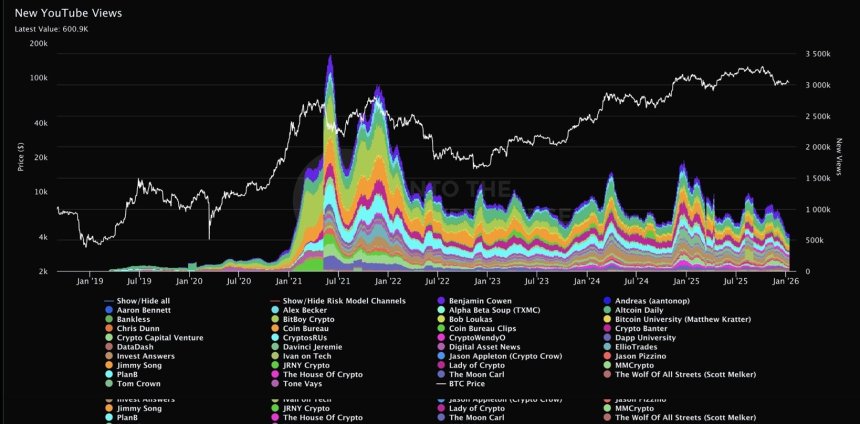
The current drop in interest coincides with Bitcoin’s price action, which has been hovering around the $90,000 level. The lack of a clear upward impulse has dampened market emotions. Many retail investors bought near local highs and are now watching the value of their portfolios decline. In such conditions, daily analyses and price forecasts lose much of their appeal.
The declining interest in the crypto industry and the visible fatigue among retail investors show that many market participants still make decisions primarily based on emotions. Investor behavior remains strongly tied to short-term price movements rather than long-term market fundamentals.
When sharp rallies or sudden sell-offs appear, FOMO returns almost instantly. Investors rush to search for information, analyses, and quick predictions, hoping to catch a profit opportunity or limit losses. Emotions fuel activity, and interest in investing spikes rapidly.
During periods of stagnation, the opposite happens. Without strong price movements, the market stops feeling exciting. Interest in investing fades, and many participants turn their attention away from crypto altogether. This highlights that for a large portion of investors, momentum and adrenaline matter more than a consistent strategy.
This pattern is harmful to the market for several reasons. First, emotional decision-making leads to buying at peaks and selling during periods of discouragement. Second, reduced interest during stable phases limits liquidity and slows the market’s natural development. Third, it reinforces the belief that investing only makes sense when something spectacular is happening.